
office@zambezistrategy.com
Want the headlines? 60-second brief.
Airtel Money began conditional trading on the London Stock Exchange on 9 October, opening below its offer price and implying a valuation near £5.3 billion ($7 billion), below the $8–9 billion range floated beforehand.
The listing was entirely secondary: Airtel Africa raised no new capital itself. Existing shareholders Qatar Investment Authority and TPG sold the shares being traded.
Dangote Petroleum Refinery extended its IPO offer window by two weeks to 27 October, after Nigeria's SEC approved the change to let investors in other African markets complete local brokerage steps.
The Absa L'Atelier Art Competition marked its 40th anniversary on 10 October, naming Ghanaian, Zambian and Nigerian Ambassador Award winners and a Durban-based Gerard Sekoto Award winner.
The 14th edition of the 1-54 Contemporary African Art Fair opens at Somerset House today, running through 18 October with a new emphasis on African Modernism.
Watch Lagos next: Design Week Lagos runs 18–25 October, and Lagos Fashion Week's SS27 shows follow straight after, 28 October to 1 November.
By Zinzile Vuma, Founder and CEO, Zambezi Strategy Group
Four developments over the past week test the same underlying question from different angles: whether global capital and global institutions will back African value at the scale Africa's own markets already believe in. Each is set out below, with its sourcing, followed by what ZSG is watching next.
LONDON — Airtel Money, the mobile-money arm of Airtel Africa, began conditional trading on the London Stock Exchange on 9 October, opening at roughly £1.96 a share before slipping to about £1.92–£1.94 within the first hour [1]. Unconditional trading, when the stock opens to the wider market rather than only investors allocated shares in the offer, was scheduled to begin on 14 October [2].
The sale was entirely secondary. Airtel Africa itself raised no new capital; existing shareholders, including the Qatar Investment Authority and TPG, sold roughly 270 million shares, raising about £529 million, with an over-allotment option for a further 27 million shares [3]. The implied valuation landed near £5.3 billion, roughly $7 billion, below the $8–9 billion range analysts had floated ahead of the listing [4].
A muted debut does not undo the scale of the listing itself; this is still one of the largest African-linked share sales London has seen this year, and reporting notes it landed alongside a broader selloff across telecom stocks, not in isolation [1]. But it is a reminder that global investors price pan-African platforms on their own terms, not on the growth premium those platforms command at home. Note on sourcing: outlets differ on the exact opening price, with some citing figures closer to $2.60 a share; treat the precise opening tick as approximate.
JOHANNESBURG — The Absa L'Atelier Art Competition announced its 2026 winners on 10 October, at the Absa L'Atelier Art & Lifestyle Fair in Waterfall City Park, marking the prize's 40th anniversary [5]. Three Ambassador Award winners were named: Reginald Boateng of Ghana, Emmanuel Chisenga of Zambia, and Segun Owolabi of Nigeria [6]. South Africa's own prize, the Gerard Sekoto Award, funded through the French Embassy's partnership with IFAS, went to Treasure Mlima, a 27-year-old Durban-based artist who works primarily in carved wood [7]. Coverage describes Chisenga's win as the first time Zambia has taken the Ambassador Award.
Sourcing note: one outlet, News24, names the Zambian winner "Emmanuel Shanga" rather than Chisenga [8], while the majority of coverage, including material republished from the organisers, uses Chisenga. We've gone with the majority spelling here and flag the discrepancy rather than silently picking one.
Forty years is a long run for a pan-African prize built on a corporate-and-embassy funding structure rather than a single patron or a media moment. It is the kind of durable, unglamorous infrastructure that ZSG's own thesis on evidence-led trust tends to value over a one-off spike in attention: not a single prize-night headline, but four decades of the same institution continuing to find and back new names.
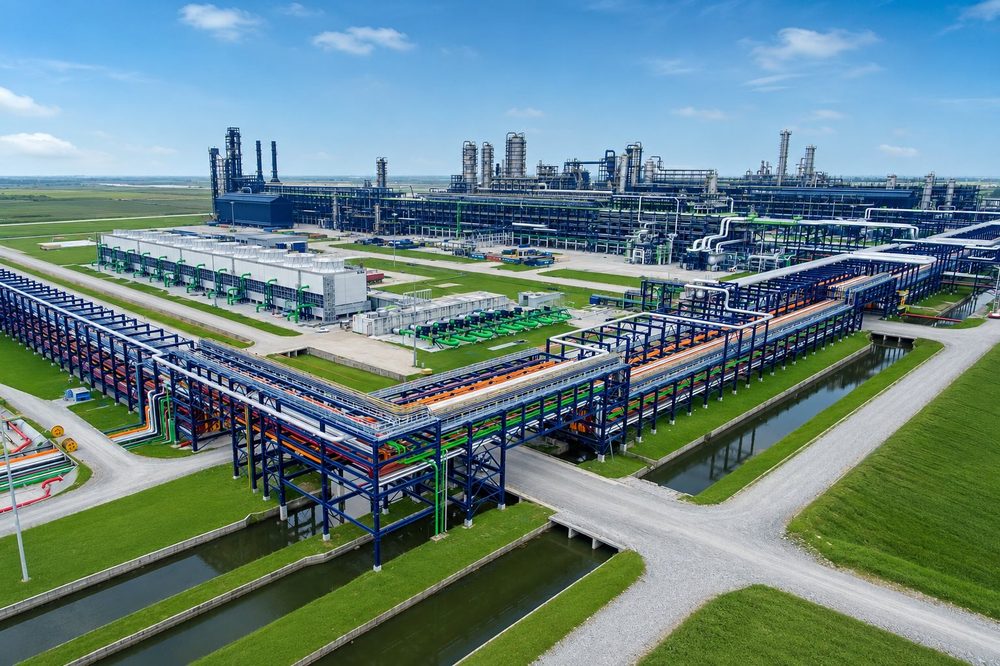
LAGOS — Dangote Petroleum Refinery extended the application deadline for its initial public offer by two weeks, moving the close from 13 to 27 October, after Nigeria's Securities and Exchange Commission approved the change [9]. The company said the extension followed strong demand "from a broad range of eligible investors across Africa and other jurisdictions," giving investors in other African markets more time to complete local brokerage and regulatory steps [10]. Kenya has cleared Nairobi-based investors to participate through depositary receipts, and Uganda has opened the offer to its wealthy and professional investors.
Reports on the offer's size vary: some describe roughly 4.1 billion shares priced at 525 naira (about $0.40) each, close to 3 percent of the company, with room to upsize by 30 percent if demand holds; others cite a $1.6 billion or $2.1 billion raise [11]. Aliko Dangote has said subscriptions already exceed the company's original fundraising target, though the company has not published a verified figure confirming that claim [12]. Trading is now expected in December, following a revised allotment-notice filing planned for 10 November.
The extension is a small but concrete data point for African capital-market integration: the delay exists specifically to let investors in other African markets, not just Nigeria, clear the paperwork to take part. That is the AfCFTA-era thesis ZSG tracks in miniature, well before any trade bloc formally touches it.
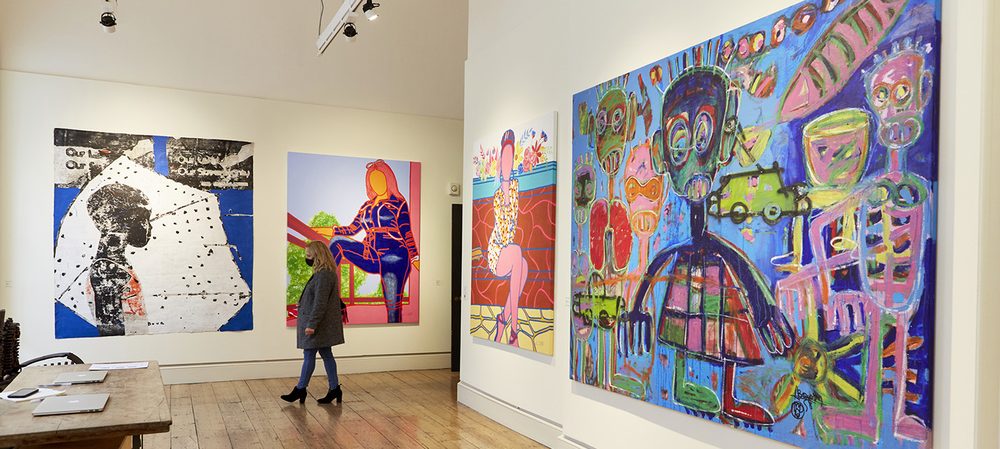
LONDON — The 14th edition of the 1-54 Contemporary African Art Fair opens at Somerset House today, 15 October, running through 18 October alongside Frieze Week [13]. This year's edition places a deliberate emphasis on African Modernism, responding to growing institutional interest in the movement rather than staying focused solely on emerging contemporary names [14]. Highlights include a solo presentation of Senegalese sculptor Seyni Awa Camara from The Gallery of Everything, and West Wind, an exhibition curated by Dr Nancy Dantas.
After years positioning itself around emerging contemporary names, 1-54's pivot toward Modernism is itself a bet, not just a curatorial choice: that museums and collectors are ready to treat 20th-century African artists with the same canonical weight already given to their European and American peers.
LAGOS — Design Week Lagos runs 18–25 October at the National Theatre, and Lagos Fashion Week's SS27 shows follow immediately after, from 28 October to 1 November. Both land the same week Dangote's extended IPO window closes, on 27 October, alongside the final day of Harrods' Brand63Africa pop-up covered in our first issue. 1-54 London runs through 18 October. ZSG will be watching all of it.
A mobile-money platform stumbling on debut, an oil refinery buying two more weeks to find subscribers, a 40-year-old art prize naming a Zambian Ambassador Award winner for the first time, and a fair betting that African Modernism belongs in the same conversation as its European counterpart: none of these are stories about arrival. They are stories about whether arrival holds. ZSG will keep tracking which of this week's bets pay off.
Africa holds close to a quarter of the world's critical mineral reserves and captures a fraction of the revenue. On why closing that gap is a branding problem as much as a trade one.
A 10-year Formula 1 deal, a hospitality sector building years ahead of the first race, and the question of who actually captures the value when global capital arrives.

Zinzile Vuma is Founder and Managing Partner of Zambezi Strategy Group, a pan-African strategy and market-entry firm. Her approach is informed by luxury brand management and international market development. She writes Continental Currents to track the developments shaping how African brands, craft and capital are positioned on the global stage.