
office@zambezistrategy.com
Want the headlines? 60-second brief.
On 13 October 2026, Rwanda and Formula 1 signed a 10-year deal for a new African Grand Prix, F1's first race on the continent since 1993.
The race will run on a purpose-built circuit in Bugesera, near Kigali's new international airport, with racing expected from 2030 at the earliest.
Rwanda's economy is already growing at 7.2 percent this year, among the fastest in Africa, with tourism revenue targeted to nearly double by 2029.
Luxury hospitality investment is already arriving in Kigali, from a Michelin-rated boutique hotel to a five-resort national park deal, years ahead of the first race.
The companies that win from this are not just hoteliers. It is a question of who builds the infrastructure of arrival, from aviation to experience to branded residence.
By Zinzile Vuma, Founder and CEO, Zambezi Strategy Group

On 13 October 2026, Formula 1 and the government of Rwanda signed a 10-year agreement to bring a new African Grand Prix to Kigali, the sport's first return to the continent since the 1993 South African Grand Prix at Kyalami [1]. President Paul Kagame, F1 CEO Stefano Domenicali and FIA president Mohammed Ben Sulayem made the announcement together in Kigali.
A race is not a brand strategy. But a decade-long commitment, arriving on top of years of deliberate sports-tourism positioning, is exactly the kind of opening ZSG spends its time on: the gap between an event landing and an economy actually being built to receive it.
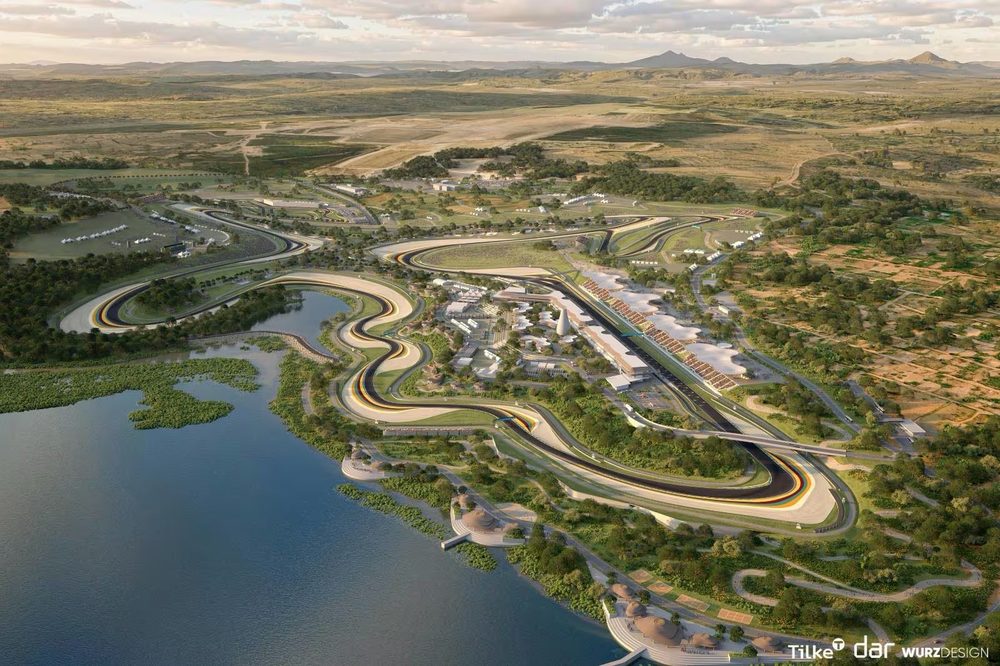
The race will run on a new, purpose-built circuit in Bugesera, built to FIA Grade 1 standard and sited next to Kigali's new international airport. The track is designed by former F1 driver Alex Wurz and his design studio, built to make use of the site's hilly terrain [2]. The event is officially billed as the Formula 1 African Grand Prix, presented by Visit Rwanda, and is expected to host its first race in 2030 at the earliest, with the exact date dependent on construction [1].
That gives Rwanda, and every business watching this deal, roughly four years before a single car turns a wheel. That runway is the opportunity.
This is not Rwanda's first sports-tourism bet. Visit Rwanda has been the sleeve sponsor of Arsenal since 2018, and has since added partnerships with Paris Saint-Germain, Bayern Munich and Atlético Madrid [3]. It is a founding and host partner of the Basketball Africa League, whose championship games are played in Kigali. In September 2025, Kigali hosted the UCI Road World Championships, the first time the event had been held anywhere in Africa [3].
Human Rights Watch and other critics have argued these deals function as reputational cover for Rwanda's human rights record, a charge the government and some regional commentators reject. That debate is real and worth knowing about, but it sits outside what this piece is assessing, which is narrower: whether the infrastructure, the hospitality capacity and the institutional practice are there to receive a Formula 1 weekend credibly. On that narrower question, Rwanda has been building the muscle for close to a decade.
Estimates of a Grand Prix weekend's economic impact vary considerably by city and by who is counting, and that variance is worth stating plainly rather than quoting whichever number is largest. Las Vegas's 2023 debut weekend generated somewhere between $1.2 billion and $1.5 billion in economic activity depending on the source [4]. Miami's 2023 race weekend contributed an estimated $449 million to the local economy, up 29 percent on its debut year [5].
The consistent thread across every host city is not the headline number, which shifts by methodology, but the spending pattern underneath it. Formula 1 does not bring mass tourism. It brings a small number of visitors who spend at several multiples of an ordinary traveller, concentrated in hospitality, private aviation, chartered transport and high-end food and beverage. That is a different economy to build for than a stadium of football fans, and it rewards different kinds of companies.
Rwanda's economy is forecast to grow 7.2 percent in 2026, among the fastest rates on the continent, according to the IMF [6]. Tourism already accounts for a meaningful share of that: the WTTC estimated tourism generated $647 million in 2024, roughly 9.8 percent of GDP. The Rwanda Development Board has set a target of $1.1 billion in annual tourism revenue by 2029, up from a 2023 baseline of $620 million [7].
The circuit itself is a genuine commitment, not a line item. Cost estimates for the Bugesera track vary widely across reporting from the bid period, from roughly $50 million at the low end to as much as $270 million for design and construction, with annual hosting fees separately estimated in the $20 million to $50 million range [8]. One estimate puts the circuit build alone at more than 1 percent of Rwanda's annual GDP [9]. None of these figures are confirmed by F1 or the Rwandan government directly, and they should be read as a range rather than a fact, but even the low end represents a serious national bet.
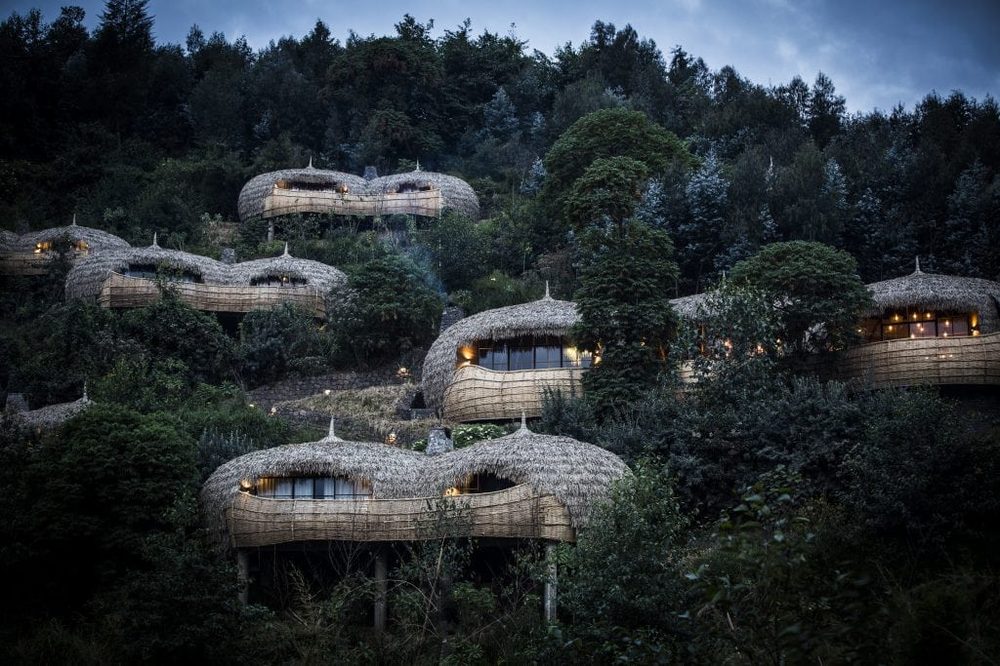
What's notable is that Kigali's luxury hospitality sector is not waiting for 2030. The Pinnacle Kigali, a nine-room boutique hotel on the Rebero Hills, opened in January 2026 as the first Rwandan property in Small Luxury Hotels of the World, and holds a Michelin One Key rating, the only property in the capital to do so [10]. The Lux Collective group has signed a deal with Cleo Capital Group for five five-star resorts, three of them sited at Volcanoes, Nyungwe and Akagera national parks [11]. Hilton's Tapestry Collection opened the Zaria Court Kigali in January 2026, part of a wider push to build out the Kigali Sports City district, and a Best Western Premier property with 41 branded residences is scheduled to open in Kacyiru in 2027 [12].
That is years of capital already committed before the Grand Prix deal was even signed. The race gives that investment a fixed, recurring reason for premium travellers to be in the city every year, which is precisely the kind of demand certainty hospitality investors look for before committing further.
The obvious answer is hotels, and hotels will benefit. But a Grand Prix economy rewards a wider, more specific set of companies than the ones that simply supply a room for the weekend.
Luxury hotel groups and branded residences capture the most durable value, because a branded residence or a flagship luxury property sells an ongoing claim to the destination, not just three nights during race week. The Lux Collective and Hilton moves already underway suggest the operators who move early get the better sites.
Private aviation and fixed-base operators matter more at a Grand Prix than almost any other sporting event, given how disproportionately the spending documented above skews toward travellers who arrive by private or chartered aircraft. Kigali's new international airport, sited next to the circuit itself, is a deliberate piece of that infrastructure.
Hospitality and VIP experience operators, the companies that build paddock clubs, curated itineraries and access packages around a race weekend, capture margin that a hotel room alone does not. This is a services business built on relationships and credibility, not inventory, and it rewards operators who can move into a new market with existing institutional trust.
Luxury retail, F&B and destination management companies round out the picture, the businesses that turn a race weekend into a reason to stay, extend, and return. None of this is unique to motorsport. It is the same provenance and positioning question ZSG works on across every sector: whoever defines the experience, rather than merely supplying a piece of it, keeps the larger share of the value a global event like this creates.
Rwanda has roughly four years before the lights go out at Bugesera for the first time. The companies that spend that runway building the story, not just the inventory, are the ones that will own the premium when it does.