
office@zambezistrategy.com
Want the headlines? 60-second brief.
On 4 September, Kenyan designer Anil Padia won the Savoir-Faire Prize at the 2026 LVMH Prize for his crochet-led label Yoshita 1967, the first Kenyan designer ever to reach the final.
Three days later, Harrods gave its fifth floor to Brand63Africa, a pop-up selling five African and diasporic designers' work through 27 October, not just displaying it.
On 28 September, MaXhosa Africa became the first South African brand to stage a full runway show on the official Paris Fashion Week calendar, after five seasons showing only as a presentation.
Designer Laduma Ngxokolo had applied for an official slot before and been turned down more than once. The collection was titled Izihlwele Zivumile, “the ancestors have co-signed.”
African startups raised roughly $1.0 billion in Q3 2026 by TechCabal's count, up from $785 million a year earlier, with fintech and logistics taking the largest share.
Watch Lagos next: Design Week Lagos runs 18–25 October, and Lagos Fashion Week's SS27 shows follow straight after, 28 October to 1 November.
By Zinzile Vuma, Founder and CEO, Zambezi Strategy Group
Four developments over five weeks mark a shift in who is being recognised for African design and craft, and who is backing that recognition with capital. Each is set out below, with its sourcing, followed by what ZSG is watching next.
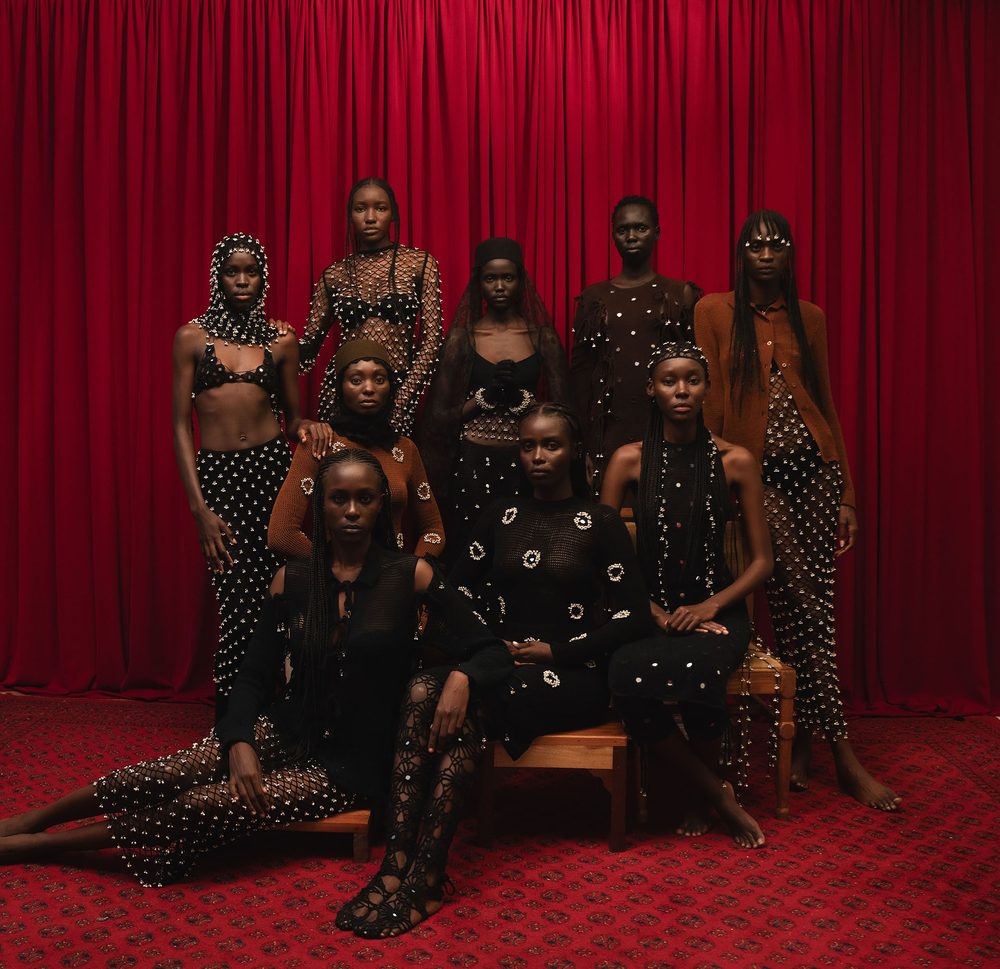
PARIS — Kenyan designer Anil Padia won the Savoir-Faire Prize at the 2026 LVMH Prize for Young Fashion Designers on 4 September, for his label Yoshita 1967 [1]. It is the first time a Kenyan designer has reached the competition's final, and the first time one has won any of its three prizes [2].
The prize carries a €200,000 endowment, a year of mentorship from LVMH's in-house craftspeople, and €50,000 in embellishment support for Padia's next collection [1]. Yoshita 1967 is built around crochet, produced through a workshop Padia runs in Nairobi with local women artisans; the label takes its name from an aunt whose story shaped its design direction [3].
The Savoir-Faire Prize is awarded for technical skill in making, a narrower and in some respects more demanding standard than the main prize's focus on a complete collection. Coverage of the win has largely emphasised that distinction rather than the fact of African representation alone.
Yoshita 1967 is quickly becoming one of my personal favourites. I've already started following both Anil Padia and the label, and this has the early feel of a brand that could build a genuine cult following. — Zinzile Vuma

LONDON — Three days later, Harrods opened the fifth floor of its Knightsbridge flagship to Brand63Africa, a pop-up founded this year by Eva Omaghomi, running from 7 September to 27 October [4]. Five labels are featured: Christie Brown of Ghana, Studio Namnyak of Kenya, Abiola Olusola of Nigeria, Sukeina of Senegal, and The Cloth of Trinidad and Tobago [5].
The installation operates as a retail activation rather than an exhibition; the collections are available for sale on the shop floor. It is Brand63Africa's first placement of this kind, following its debut at London Fashion Week, and Omaghomi has said a follow-up is already under discussion [6].
The notable detail is curatorial rather than geographic. A single point of view, applied consistently across five designers from four countries and the diaspora, presents the work as one coherent proposition rather than five separate showcases. That is the same discipline ZSG applies whenever a brand is introduced to a partner or retailer: provenance alone rarely closes a sale; a clear, consistent reason to buy does.
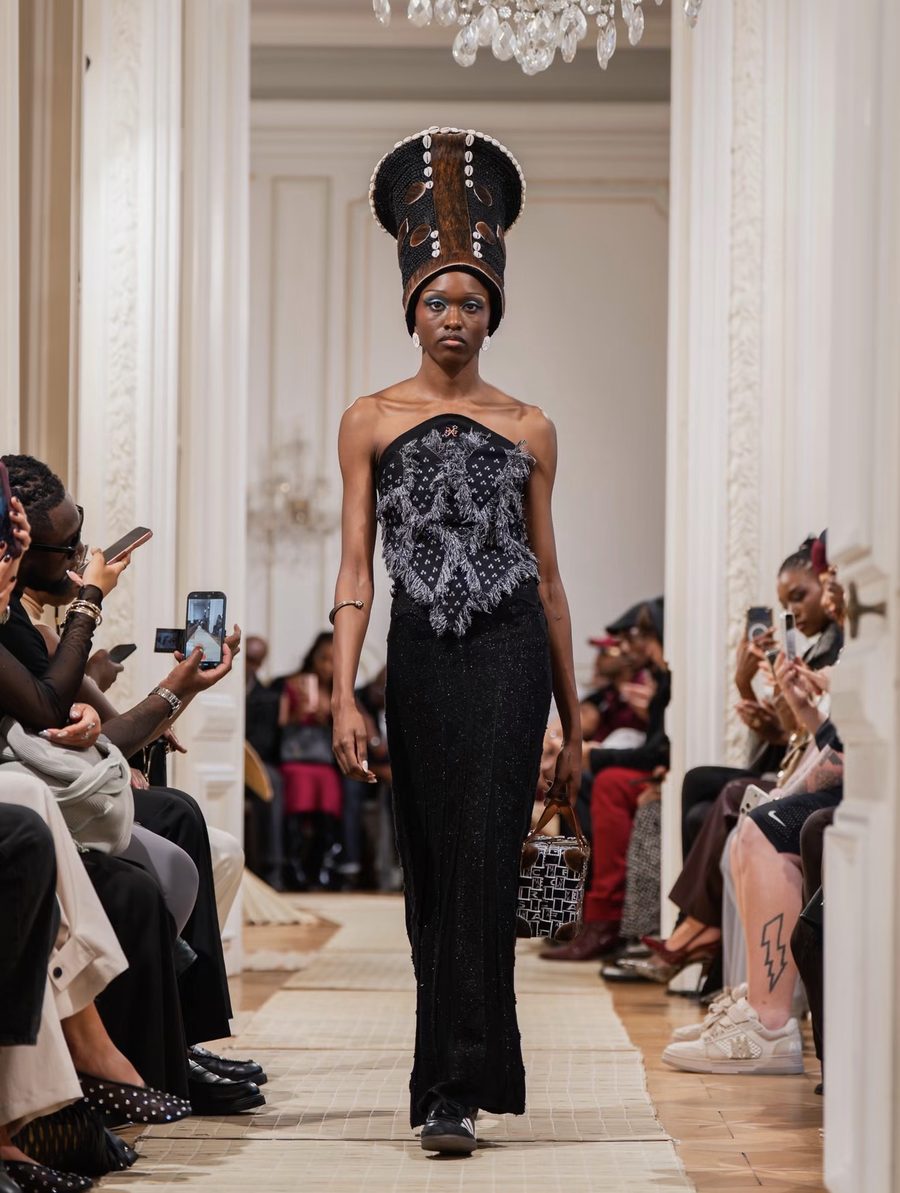
PARIS — On 28 September, MaXhosa Africa staged the first full runway show by a South African brand on the official Paris Fashion Week calendar [7]. The label, founded by designer Laduma Ngxokolo, had shown in Paris for five seasons as an off-calendar presentation; earlier applications for an official slot had been declined [8].
The Spring/Summer 2027 collection, Izihlwele Zivumile, translated by the Fédération de la Haute Couture et de la Mode as "the ancestors have co-signed," was staged at the South African ambassador's residence on a catwalk of woven straw mats. One wool dress carried knitted tassels bearing the names of every country on the continent [9].
The design work itself was not new; five seasons of presentations had already established it. What changed was institutional access: a place on fashion's primary calendar rather than its margins.
Whether the show converts into wholesale orders or a standing slot on the Paris calendar remains to be seen. What is already established is that one of the clearest statements on African design authorship this year was made on fashion's largest stage, by the house that produced the work.
African startup funding rose in the third quarter of 2026, though estimates vary considerably by tracker. TechCabal reports approximately $1.025 billion across 167 disclosed deals, up from $785 million a year earlier [10]. Africa: The Big Deal, which tracks equity funding only, reports approximately $580 million, roughly flat year over year [11]. Disrupt Africa, tracking a narrower set of 58 startups, reports $583 million, an increase of 70 percent [12]. The figures reflect differing methodologies and should not be treated as directly comparable.
Across trackers, fintech and logistics accounted for the largest share of funding, with logistics alone drawing an estimated $472 million [10]. That is less visible than a Paris runway, but it is the infrastructure layer underneath it: every sector ZSG works in, luxury included, depends eventually on more reliable logistics and payments to reach its market.
LAGOS — Design Week Lagos runs 18–25 October at the National Theatre, following earlier appearances this year at Salone del Mobile in Milan and Paris Design Week [13]. Lagos Fashion Week's SS27 shows follow immediately after, from 28 October to 1 November [14]. ZSG will be covering both.
Taken together, the four developments point to the same underlying shift. A luxury conglomerate's jury, a Paris fashion federation, a London department store and a continent's worth of investors each made an independent decision, within the same five weeks, that African-made work merited a prize, a stage, a shelf, or capital. The remaining question is who shapes the narrative around that recognition as it continues, a question ZSG will keep tracking in the editions that follow.
Africa is making the goods. The question is whether the institutional framework exists to say so with authority.
Africa holds close to a quarter of the world's critical mineral reserves and captures a fraction of the revenue. On why closing that gap is a branding problem as much as a trade one.

Zinzile Vuma is Founder and Managing Partner of Zambezi Strategy Group, a pan-African strategy and market-entry firm. Her approach is informed by luxury brand management and international market development. She writes Continental Currents to track the developments shaping how African brands, craft and capital are positioned on the global stage.